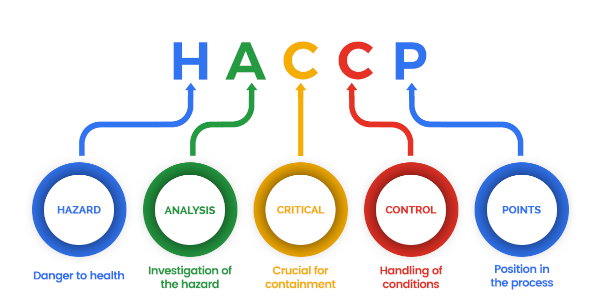
HACCP (Hazard Analysis and Critical Control Points)
It is a tool designed to safeguard food from biological, chemical, physical and allergens hazards that could compromise safety. This plan plays a crucial role in minimizing the likelihood of serious health issues or fatalities caused by the consumption of contaminated food.
HACCP Certification
HACCP certification is a credential that demonstrates an individual’s ability to apply Hazard Analysis Critical Control Point (HACCP) principles to manage food safety risks in food environment. To obtain HACCP certification, individuals typically need to complete accredited training courses that cover the necessary knowledge and skills.
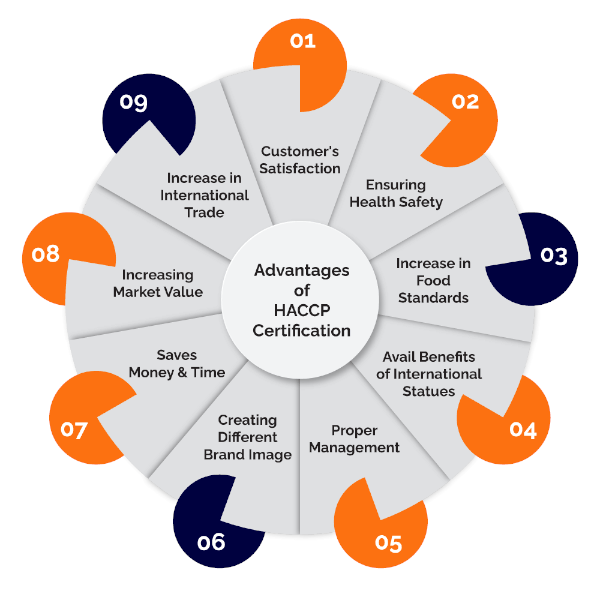
Advantages Of HACCP Certification
UQAS LLC certified with HACCP certification Improve product quality Builds trust among consumers, industry, and public agencies.
Why Choose UQAS HACCP Certification?
UQAS LLC HACCP Certifications, conducted by a competent and skilled professional, brings unmatched proficiency in client food safety. Our HACCP certification guarantees that your company adheres to stringent standards for managing biological, chemical and allergen hazards in a food processing environment. With UQAS HACCP Certifications, you can rest assured that your operations are fine-tuned to produce safe, superior quality food products, our assessment aids in legal compliance and your brand reputation, to enhance customer confidence and trust. Collaborate with us, the leading HACCP certification authority in Oman, to protect your enterprise and reassure your clients of food safety. In today’s world, where consumers are increasingly vigilant about the safety and quality of their food, securing HACCP certification is crucial for any food-related enterprise. By choosing UQAS LLC HACCP certification, you are committed to the health and well-being of your customers, as well as the prosperity and sustainability of your business.
Our competent experts can verify the requirements for effective control of food safety. It revolves around 7 principles and 12 Steps.
- Conduct Hazard Analysis of biological, chemical or physical on food
- Determine critical control points
- Establish critical control limits, e.g., minimum cooking temperature and time
- Establish a system for critical control monitoring
- Establish corrective actions
- Establish verification procedures to ensure effective operation of HACCP system
- Establish documentation and record keeping